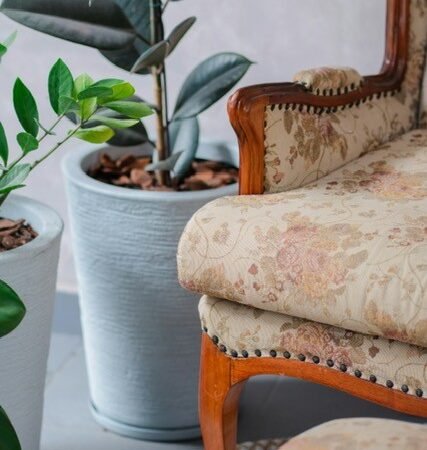
I’ve always been partial to French decor styles. Their timeless, classic elegance has a certain je ne sais quoi, if you will. Three decorating styles are often grouped together because of their French influence and shared characteristics: French Country, French Provincial, and Shabby Chic.
So, what’s the difference between the three? They all share traits such as vintage charm and a soft aesthetic, but they differ in their levels of formality and romance.
French Country
Let’s start with French Country. Here’s the visual: think warm neutrals or pastels paired with worn wooden furniture. A pale blue armoire with a heavily distressed finish. An intricately carved chair beside a limestone fireplace. An antique desk and chair with cabriole legs.
French Country is a warm, casual and rustic style inspired by homes and farmhouses in the French countryside, particularly Provence. Its materials often feel raw or weathered: aged wood, exposed stone, wrought iron, limestone and brick.
The color palette most associated with French Country includes warm neutrals such as beige, creamy white and taupe, paired with earthy muted accents such as terracotta and olive green. Its signature patterns include checks, stripes, florals and, most certainly, toile de Jouy. Toile became popular in France during the 18th century and is known for its detailed scenic prints, often depicting pastoral life, historical events or romantic landscapes.
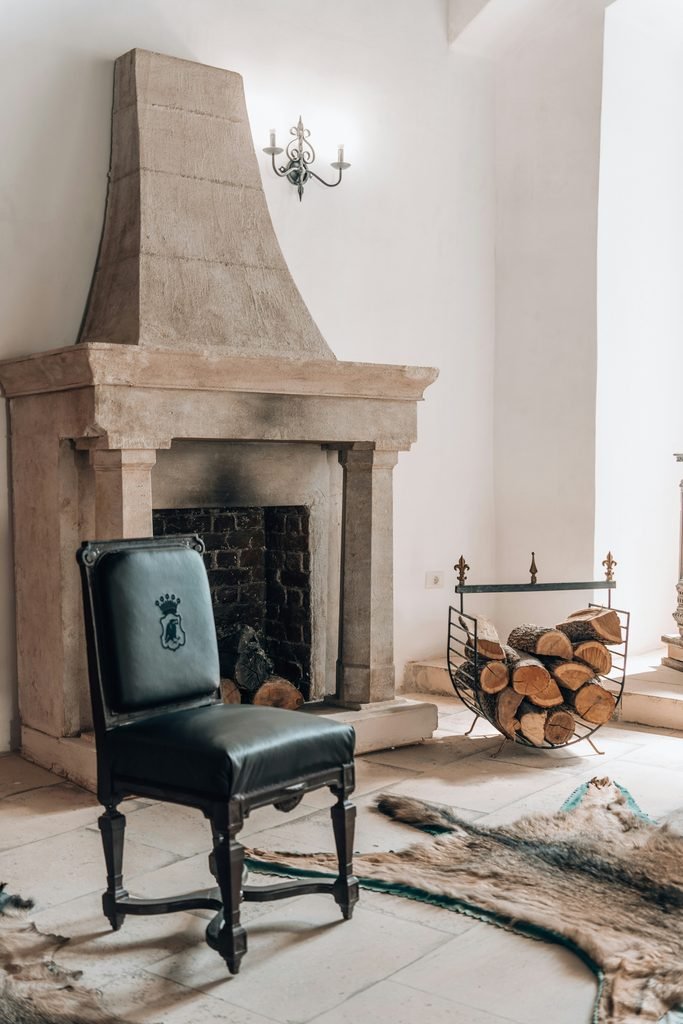
French Country example—Photo by Tim Mossholder on Unsplash
French Provincial
Second in our comparison is French Provincial. This style is more refined than French Country, but it is still less formal and ornate than the furniture created for the French royal court.
French Provincial furniture was made in the regions outside Paris. Local craftspeople borrowed the graceful lines of fashionable Louis XV and XVI furniture, then adapted them using regional materials and somewhat simpler ornamentation.
The furniture often features cabriole legs, curved silhouettes and carved details—characteristics also found in French Country and Shabby Chic interiors. In modern interpretations, gilded accents and richer upholstery fabrics such as velvet may add another layer of elegance.
Its color palette frequently includes soft pastels, chalky whites, sage green and pale blue, complimented by touches of gold.
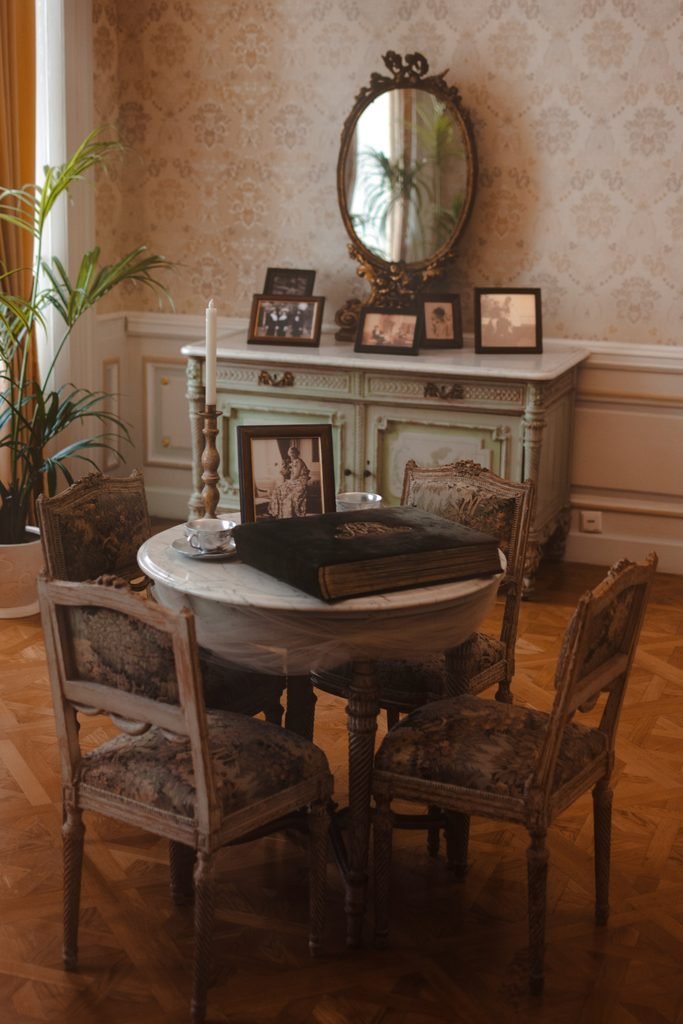
French Provincial example—Photo by Evgeni Adutskevich on Unsplash
Shabby Chic
Shabby Chic is a romantic, airy decorating style that borrows ideas from both French Country and English country interiors. It has some of the warmth of French Country, but with a softer, more feminine and deliberately timeworn appearance.
The style was popularized in the late 1980’s and 1990’s by designer Rachel Ashwell. Think Laura Ashley— or Jessica McClintock translated into a room.
Furniture is often heavily distressed, whitewashed or both. Chippy paint emphasizes a worn-over-time appearance rather than the look of untouched antiques. Lace, ruffles, relaxed slipcovers, floral prints and vintage accessories such as dried roses compliment the style.
Stark whites, creams and delicate pastels dominate the Shabby Chic palette. Blush pink, pale blue, and mint green are especially common.
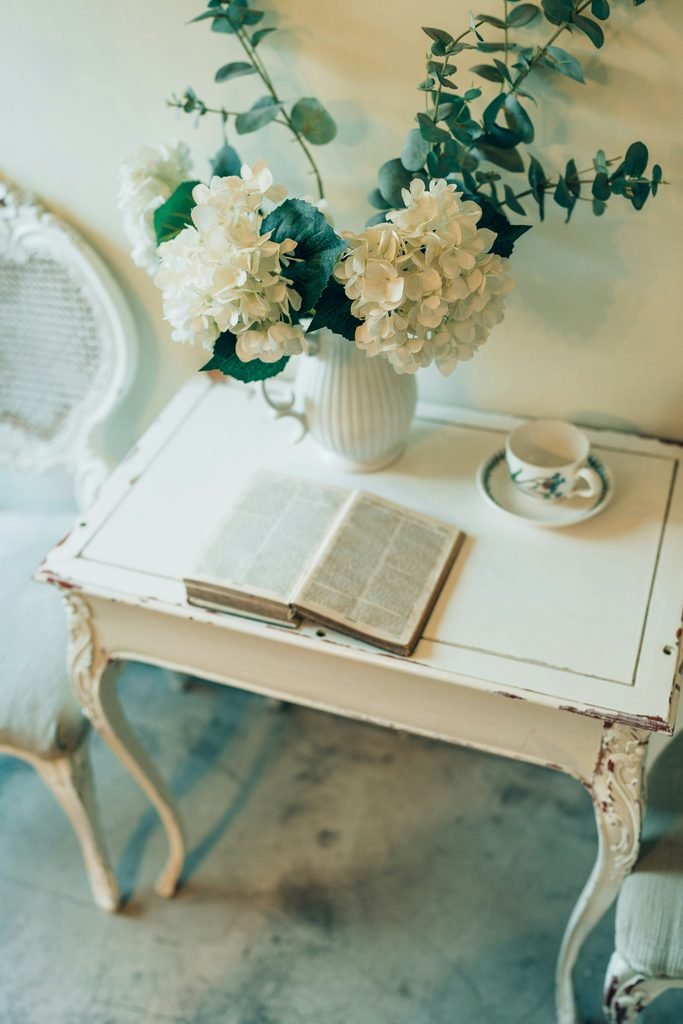
Shabby Chic example—Photo by Dixon on Unsplash
The simplest way to remember the difference is this:
- French Country is warm, rustic and collected.
- French Provincial is graceful, refined and more formal.
- Shabby Chic is faded, romantic and intentionally feminine.
French Country vs. French Provincial vs. Shabby Chic at a Glance
| French Country | French Provincial | Shabby Chic | |
| Overall Feeling | Warm, rustic and relaxed | Refined, graceful and formal | Romantic, airy and feminine |
| Furniture | Weathered wood and carved details | Curved silhouettes and elegant ornamentation | Distressed, painted or slipcovered |
| Materials | Stone, brick, wood and wrought iron | Fine wood, gilding and richer fabrics | Linen, lace, cotton and chippy painted wood |
| Colors | Warm neutrals and earthy muted tones | Soft pastels with touches of gold | White, cream, blush and delicate pastels |
| Patterns | Toile, checks, stripes and florals | Damask, toile and formal florals | Faded florals, roses and delicate prints |
| Best Description | Collected country warmth | Polished French elegance | Pretty, faded romance |
Although these French decor styles have their own distinctive characteristics, elements from all three can be blended. I don’t believe there should be strict rules when it comes to creating a home you love. After all, the most beautiful rooms are often the ones that don’t fit perfectly into any single category.
Leave a Reply