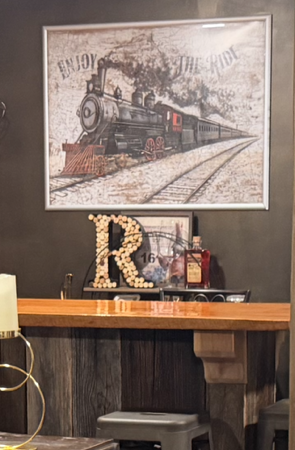
In Part Une of our basement rec room refresh, we established a moodier direction for the space. In Part Deux, leftover paint created the rich blackened-bronze wall behind the bar. With that backdrop finished, it was time to style the basement rec room using mostly what we already owned.
Once the paint had dried, the next step wasn’t just shopping. It was taking a closer look at everything already in the room.
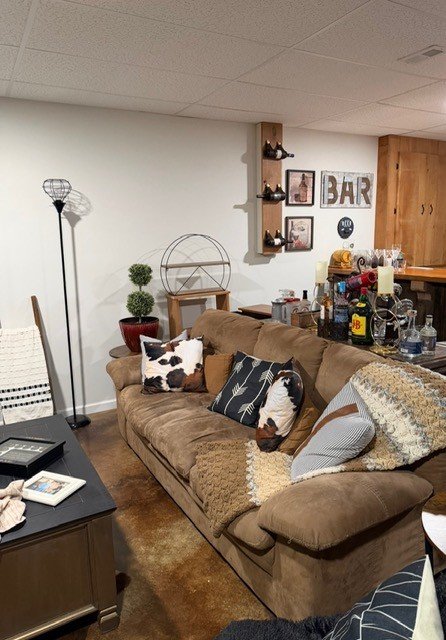
The basement had plenty of furniture and accessories. The problem was that they felt disconnected. By removing a few distractions, rearranging existing pieces and creating more deliberate groupings, we began to give the room a clearer identity.
Editing Came Before Styling
Before deciding what to display, we considered what the room could do without.
Not every empty spot needed to be filled, and not every object needed to remain visible. Removing unrelated pieces gave the stronger items more room and made the basement feel less cluttered.
This was especially important around the shelving and smaller furniture. Instead of treating every surface as a place to store something, we began using each one to create a more focused arrangement.
Editing the room also made it easier to see what was missing—and what we already owned that could fill the gap.
Creating a Collected Railroad Theme
The decor in this room has always had a subtle railroad influence, but we didn’t want it to resemble a themed restaurant or a collection of novelty signs.
The solution was restraint.
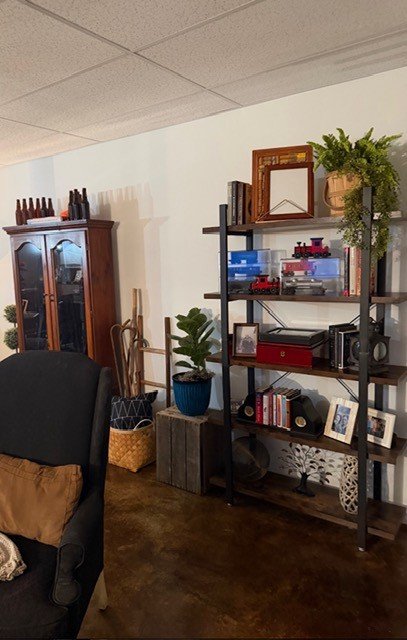
Rather than displaying every railroad-related item together, we selected a few pieces and mixed them with books, industrial finishes and everyday accessories. Spreading those references around the room allowed the theme to feel intentional without becoming overwhelming.
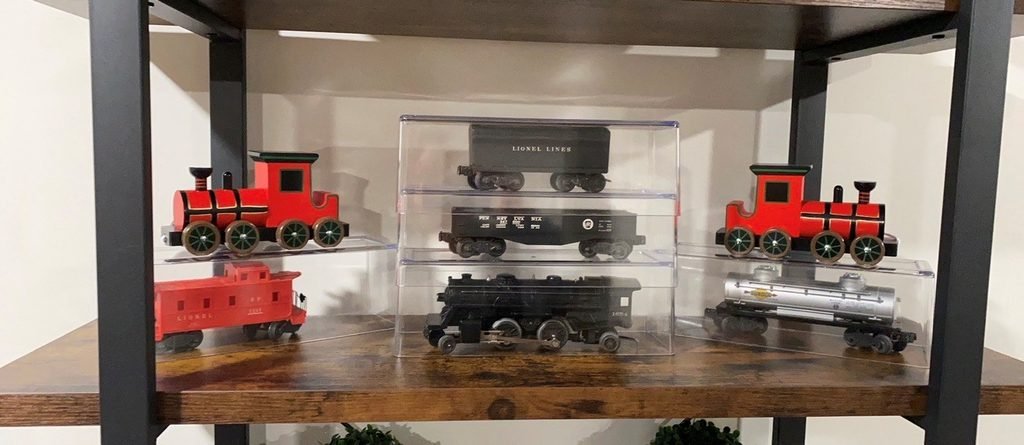
Some of the railroad pieces came from my father’s Lionel train set, which dates from around 1945. We still have the original boxes and sections of track, but displaying the entire collection would have been too much for this room.
Using only a few pieces gave them more visual impact while keeping the overall look balanced.
Reconsidering Artwork We Already Had
One of the easiest pieces to overlook was a train drawing I made several years ago. It was already in the basement, tucked away on a shelf where it received very little attention. The drawing now made sense in a way it hadn’t before. It supported the railroad influence without adding another reproduction sign or store-bought decoration.
That became one of the more useful lessons from this phase: before purchasing new decor, look carefully at what may already be stored, stacked or overlooked elsewhere in the room. Sometimes an existing piece just needs a better location.

Repeating Materials Instead of Matching Everything
We also used repeated materials and finishes to connect objects that weren’t part of the railroad theme.
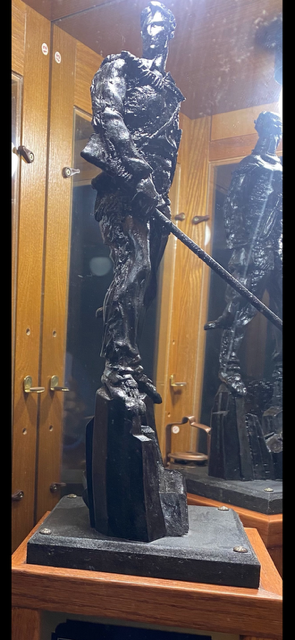
Jeff’s Mountaineer sculpture, which was presented to him during his tenure working in West Virginia, is made from real West Virginia coal. Its dark color and rugged texture naturally fits in the space. It doesn’t match the railroad pieces, nor does it need to. The common colors and materials make it feel connected to the rest of the room.
Repeating wood tones, dark metals and weathered finishes created more unity than matching every accessory to one specific theme would have.
Giving Existing Pieces More Purpose
Once we removed the distractions and grouped related objects more carefully, the furnishings began to feel more intentional.
The dark wall provided a backdrop. The wood and metal finishes repeated across the space. Railroad pieces appeared in smaller doses, and overlooked artwork became part of an overall design.
None of these changes required buying more decor.
The most effective part of this state was simply deciding which pieces supported the new direction and giving those pieces enough room to be noticed.
How to Style a Basement Rec Room Before Shopping
The easiest way to style a basement rec room on a budget is to begin by editing and rearranging existing pieces. It is tempting to begin a room refresh by making a shopping list, but this basement needed editing before it needed anything new. Working with what we already owned helped us identify the room’s strongest elements and prevented us from purchasing accessories simply to fill space. It also gave us a much clearer idea of which new pieces would actually improve the finished room.
Learning how to style a basement rec room with existing decor also helped us decide which new additions were actually worth buying. In Part Quatre, I’ll share the complete basement rec room reveal, compare three inspiration images with the finished space and breakdown the rug, accessories and other purchases that brought the refresh together for less than $200.
Leave a Reply